SBC API INTEGRATION
SBC API Integration for Smarter Voice Networks
ProSBC’s powerful scripting engine leverages over 100 call parameters to create intelligent API integrations with fraud detection platforms, routing engines, compliance tools like STIR/SHAKEN, and more.

OVERVIEW
Programmable SBC for Modern Voice Networks
ProSBC is a high-performance, carrier-grade Session Border Controller trusted by service providers worldwide. Its strength lies in a powerful scripting engine at the core of every ProSBC API. This engine leverages over 100 call parameters to create intelligent, highly customizable call flows. When these scripts interact with external services, they become dynamic API integrations that enhance real-time decision-making.
API FEATURES
Overview of ProSBC API Capabilities
| API Feature | Function | Use Cases | Resources |
|---|---|---|---|
| REST API Integration | Enables external systems to interact with ProSBC using HTTP methods (GET, POST, PUT, DELETE) for call decisions, provisioning, and monitoring. | Fraud Prevention, Branded Calling, Call Reputation, SBC Provisioning, Data-Driven Call Routing | Webinar, Case Study |
| STIR/SHAKEN API Support | Verifies and signs calls using REST or SIP Identity headers for caller authentication and regulatory compliance. | STIR/SHAKEN Compliance, Branded Calling | STIR/SHAKEN Integration |
| Routing Script Engine | Uses Ruby-based scripting to define custom call routing logic in the browser without compilation. | Advanced Routing, Service Chaining | Routing Scripts |
| CNAM, LNP, Toll-Free Lookup | Performs external lookups via REST API to retrieve caller name, number portability status, and robocall analytics. | LNP Routing, CNAM Delivery, Toll-Free Call Handling | ClearIP Integration Guide |
| Real-Time Billing & CDR | Generates detailed CDRs and supports billing event triggers for integration with external charging systems. | Billing | CDR Configuration |
DEEP DIVE
REST API Integration
ProSBC supports REST API integration during SIP call processing, enabling interaction with external systems in real time. This functionality is driven by ProSBC’s scripting engine, which allows for precise control over when and how API calls are executed using more than 100 available call parameters, such as caller ID, dialed number, or SIP headers.
This approach allows service providers to implement use cases like fraud prevention, branded calling, call reputation analysis, SBC provisioning, and data-driven call routing. Because the API logic is handled within the script, integration is highly flexible and can be tailored to meet specific operational or business requirements.
API calls are made during the signaling phase of the call, ensuring that decisions are made quickly and do not affect media quality. The result is a scalable, reliable way to enhance call handling with external data and services.
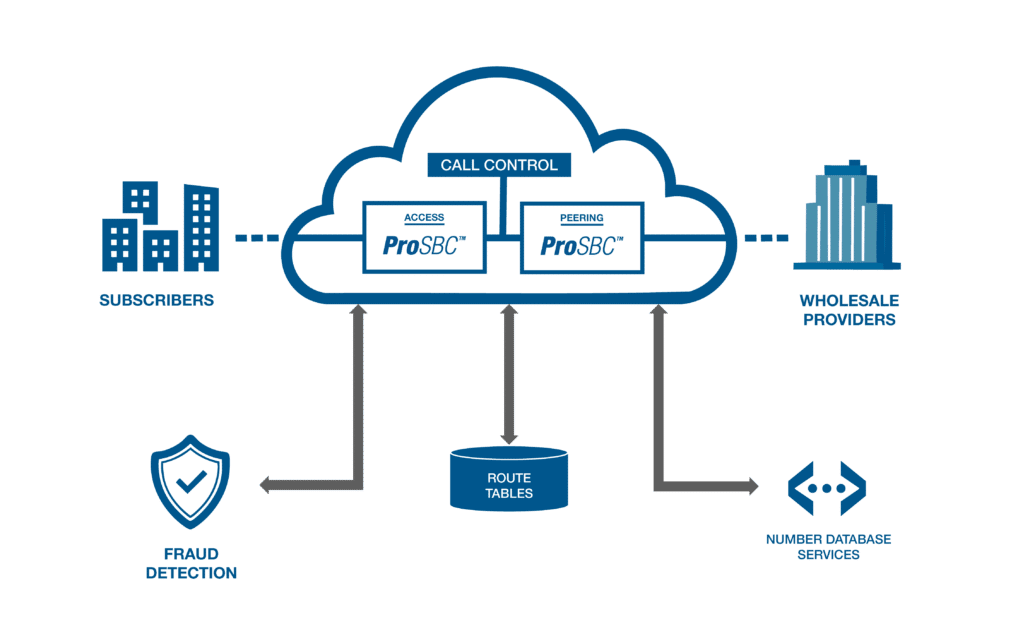
Example of a network architecture of ProSBC API Integration
Watch the REST APIs and ProSBC webinar recording or read the Aircall case study.
MORE CAPABILITIES
Additional API Features
STIR/SHAKEN API Support
ProSBC integrates with STIR/SHAKEN authentication services using REST or SIP Identity headers. It signs and verifies calls to prevent spoofing and comply with regulations. Prebuilt scripts simplify deployment with common platforms.
Routing Script Engine
ProSBC’s routing script engine uses the Ruby programming language to create flexible, browser-based call routing logic without compilation. It supports built-in scripts for use cases like least-cost routing, round-robin, SIP trunking, and over-subscription.
CNAM, LNP, and Toll-Free Lookup
ProSBC integrates with services like TransNexus ClearIP to perform CNAM, LNP, and toll-free number lookups via REST API during call setup. The SBC sends call data to ClearIP, which returns caller name, porting status, and robocall analytics that ProSBC can use to adjust routing or caller display.
Real-Time Billing and CDR Integration
ProSBC generates customizable Call Detail Records (CDRs) and supports external charging triggers. These can be exported or sent via API for billing and reconciliation.
Ready to Get Started With SBC API Integration?
Whether you’re integrating a fraud detection engine, enabling branded calling, or adding advanced routing logic, ProSBC APIs give you the control and flexibility to build the voice services your business needs.
FAQ