Telecom fraud detection for network protection
Fraud and illegal robocalling continue to erode trust in voice networks, costing providers time, revenue, and reputation. TelcoBridges helps service providers stop these threats at the network edge by embedding fraud detection, call validation, and traffic-monitoring tools directly into our ProSBC and Tmedia platforms. Suspicious calls can be identified, rerouted, or blocked in real time before they ever reach subscribers.


Reliable defense against telecom fraud
The TelcoBridges Fraud Prevention Solution brings together several components that work in tandem to stop fraudulent traffic. These include integrations such as the Do-Not-Originate (DNO) Module powered by Somos for verified caller data, advanced policy-based routing to automatically reject or reroute suspicious calls, built-in STIR/SHAKEN call authentication to validate caller identities, and real-time monitoring tools that provide visibility into call behavior and network anomalies. Each element strengthens a broader, adaptive framework designed to help service providers meet FCC robocall mitigation standards, safeguard their customers, and preserve trust in voice communication.
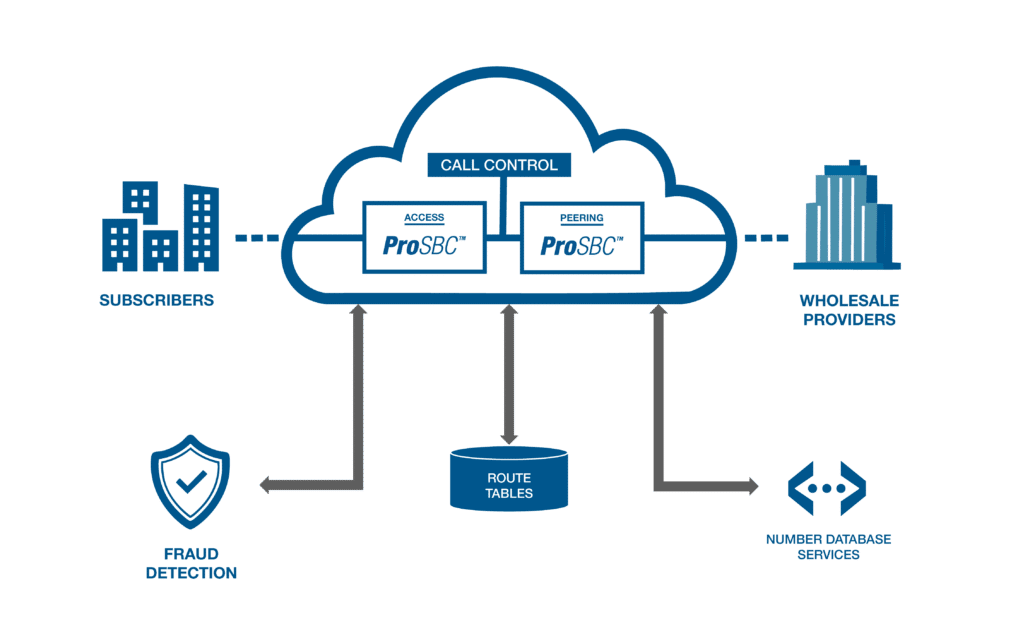
ProSBC API Integration Architecture
How the DNO Module works with TelcoBridges
TelcoBridges has introduced a DNO Module to help you meet new FCC DNO blocking requirements.
Our DNO Module, available “out-of-the-box” as a ready-to-use add-on in your ProSBC or Tmedia license, is the fastest and easiest way to ensure compliance with the FCC mandate.
The DNO module automatically checks every outbound call passing through ProSBC or Tmedia systems in real time. Calls originating from numbers that are a match to the DNO database can be blocked before the next leg, helping service providers stay compliant with the FCC.
TelcoBridges’ DNO Module relies on Somos’ RealNumber database, the most comprehensive database on the market, to maximize protection and ensure complete network integrity.
The DNO module comes preloaded and preconfigured, eliminating the need for complicated setup. All verification activity is recorded directly in a network’s Call Detail Records (CDRs), providing full visibility into which calls were checked and rejected.
WHY TELCOBRIDGES
Why choose TelcoBridges for telecom fraud prevention

Fraud protection that starts at the network edge
TelcoBridges gives service providers the ability to stop fraudulent calls before they enter the network. By embedding fraud detection and call validation directly into ProSBC and Tmedia, providers can block suspicious traffic in real time, using tools like call pattern analysis, policy-based routing, and trusted data sources (such as DNO lists).

A future-proof defense that evolves with threats
Robocaller fraud is constantly changing, and so are TelcoBridges’ defenses. With a “no-end-of-life” policy and regular platform enhancements, service providers stay protected without costly migrations or product replacements. As new fraud schemes emerge, TelcoBridges keeps pace through active industry collaboration, continuous software updates, and integrations that extend the life and security of every deployment.

Expert support when needed
TelcoBridges offers options for support from our Technical team based at our headquarters in Canada. From deploying the DNO module to monitoring call traffic and responding to potential threats, our experienced technical team can help keep networks secure and protected.

20+ years of telecom expertise
TelcoBridges combines deep industry knowledge with proven telecom fraud detection solutions. Backed by our “no end-of-life” policy, the Fraud Prevention solution receives ongoing updates and enhancements, ensuring networks stay compliant, secure, and protected against evolving telecom fraud threats.
Stop call fraud before it affects your network
Ensure every call is verified, secure, and compliant with TelcoBridges’ telecom fraud management solution. Fill out the form below or call us at +1 450 903-8194.
FAQ